
John Finnis
Professor Emeritus of Law & Legal Philosophy, University of Oxford

John Finnis FBA is Professor Emeritus of Law & Legal Philosophy at the University of Oxford and Biolchini Family Professor of Law in the University of Notre Dame. He was Rhodes Reader in the Laws of the British Commonwealth in the United States in the University of Oxford from 1972 to 1989 and then Professor of Law & Legal Philosophy there until 2010. He is a Fellow of the British Academy in the Law and Philosophy sections, an Honorary Fellow of University College, Oxford and a member of Gray’s Inn.
Related Publications
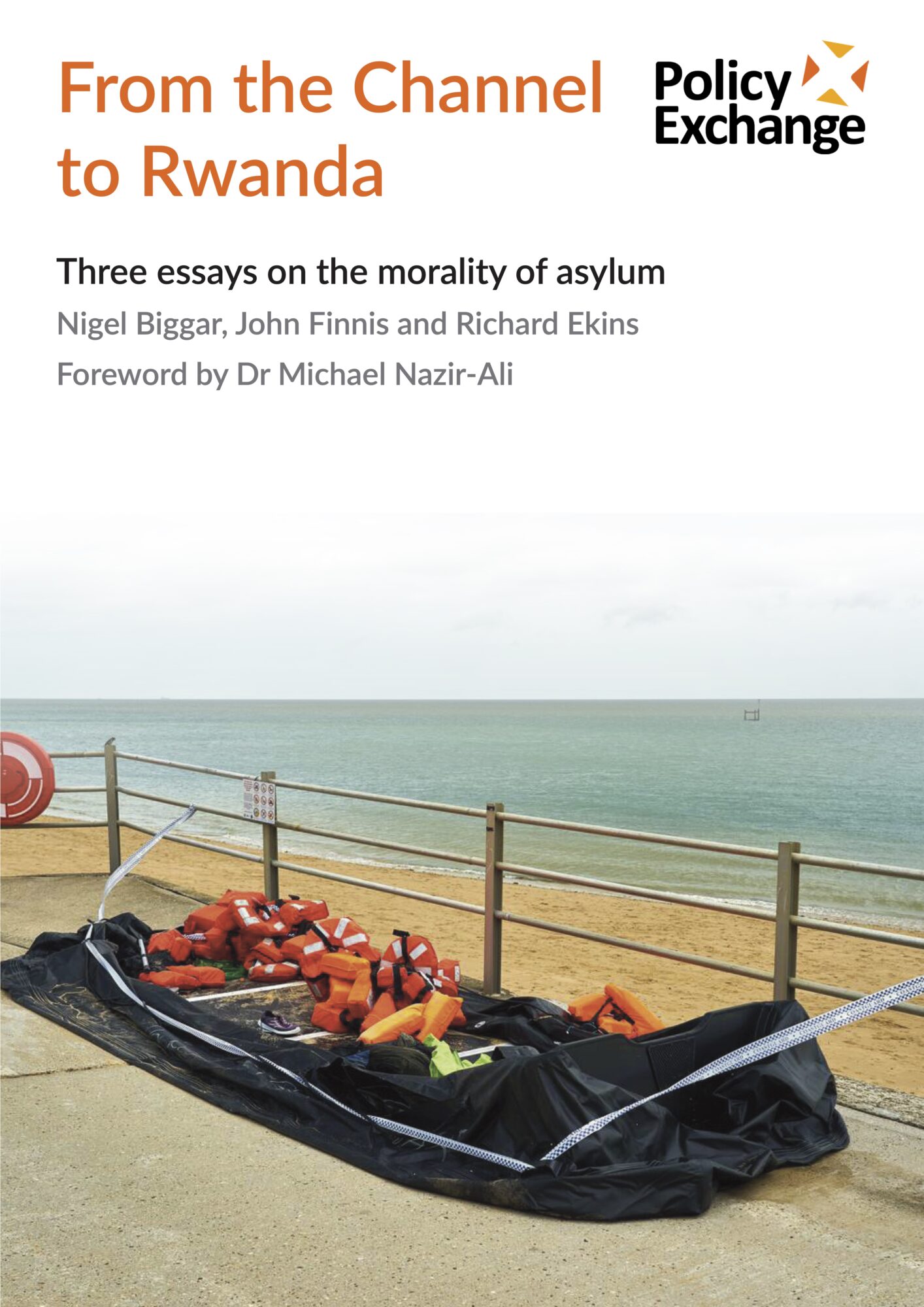
From the Channel to Rwanda
Download Publication Online Reader The government’s Rwanda plan has been roundly denounced by the leaders of the main Christian churches in Britain. Notably, the Archbishop of Canterbury devoted his Easter sermon to the subject and the Lords Spiritual have jointly attacked the Rwanda plan in the press. Policy Exchange’s new paper answers the moral and theological critique which has been advanced in recent months. The contributors to the paper, two […]
The Nationality and Borders Bill and the Refugee Convention 1951
Lorem ipsum dolor sit amet, consectetur adipiscing elit. Ut elit tellus, luctus nec ullamcorper mattis, pulvinar dapibus leo. Download Publication What rights and protections does the Refugee Convention 1951 require the UK to afford to persons it recognises as Convention refugees? In answering this question, the Ninth and Twelfth Reports of the Joint Committee on Human Rights on the Nationality and Borders Bill fundamentally misunderstand the Convention, unwarrantably truncate its […]
Immigration, Strasbourg, and Judicial Overreach
Download Publication Online Reader This paper traces the history of several judicially demanded or created obstacles to preventing unlawful entry or removing illegal migrants. The decisions to create these obstacles, it argues, were well-motivated but unauthorised and even unprincipled. This is a story in which European courts and our own courts all have a part. In the lead was the Strasbourg Court. Our courts have sometimes criticized and slowed the […]
The Law of the Constitution before the Court
The Supreme Court’s prorogation judgment, Miller/Cherry, was contrary to the settled law of the constitution. This paper, which complements and completes an earlier critique, refutes attempts to deny the judgment’s revolutionary character, attempts that cannot be squared with key facts about prorogation in the run-up to the Bill of Rights 1689, with Erskine May’s Law and Practice of Parliamentary, and with the primary 20th century textbook on the law of the constitution. The paper details the factual misjudgements and injustices at the heart of the Supreme Court’s judgment, and confirms the wisdom of the law of non-justiciability that the judgment casts aside.
The unconstitutionality of the Supreme Court’s prorogation judgment
The Supreme Court’s judgment in Miller/Cherry [2019] UKSC 41 holds that Parliamentary sovereignty needs to be judicially protected against the power of the Government to prorogue Parliament. But the Judgment itself undercuts the genuine sovereignty of Parliament by evading a statutory prohibition – art. 9 of the Bill of Rights 1689 – on judicial questioning of proceedings in Parliament.This was wholly unjustified by law.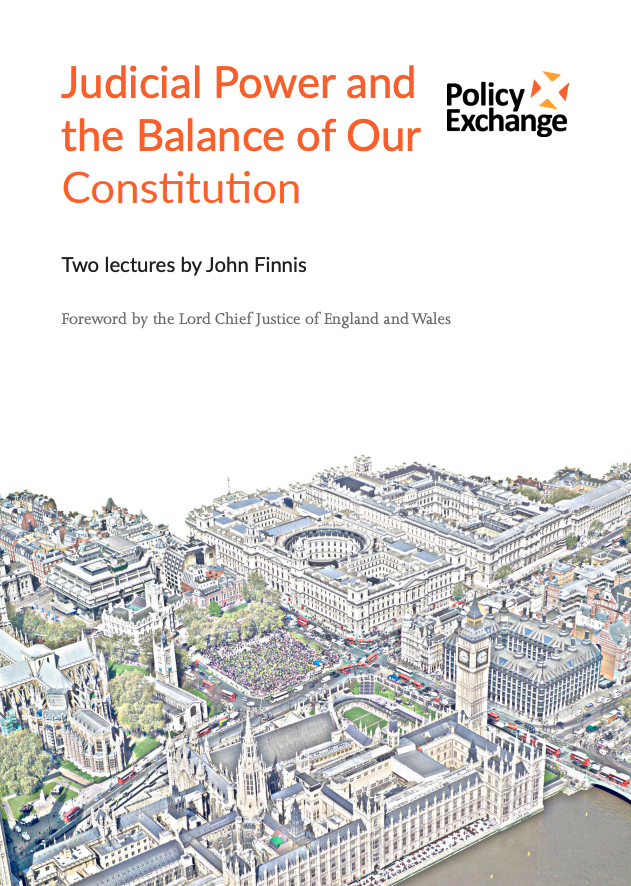
Judicial Power and the Balance of Our Constitution
Download Publication Online Reader This collection reflects on the place of judicial power in the common law constitutional tradition. It is framed around two lectures by John Finnis. The first, delivered in Gray’s Inn in October 2015, considers the idea of judicial power in historical and philosophical perspective, outlining the balance that has long characterised the Westminster constitution, and considering the extent to which that balance is now in doubt. […]
Brexit and the Balance of Our Constitution
Download Publication Online Reader Following on from his three Judicial Power Project papers on Miller, Professor John Finnis delivered the Sir Thomas More Lecture at Lincoln’s Inn on ‘Brexit and the Balance of Our Constitution’, on 1 December 2016. The lecture provided powerful explanation of constitutional principle and the sound way to understand the legal issues at dispute before the Supreme Court in the Miller case next week. We are extremely pleased to publish the final […]
Terminating Treaty-based UK Rights: A Supplementary Note
Download Publication Online Reader This post is excerpted from a second short paper published today, available here. In a Judicial Power Project paper of 26 October, Terminating Treaty-based UK Rights, I argued that UK law and constitutional practice about double tax treaties provides a clear and uncontroversial parallel for the process whereby the Government, in the exercise of its prerogative (non-statutory) power in foreign affairs, will give notification under TEU art. 50 of […]
Terminating Treaty-based UK Rights
Download Publication Online Reader This post is excerpted from a short paper published today, available here. Oral argument in the Brexit Case in the Administrative Court last week left an easy case looking a bit difficult. It allowed Lord Pannick QC, for the lead claimant, to reiterate a couple of dozen times in his Reply, unchallenged, the glaringly fallacious syllogism on which he has rested the claim: (1) statutory rights enacted by Parliament cannot […]Related Blogs

John Finnis | Judicial Usurpation and Human Rights
Human Rights and Political Wrongs gives us an unrivalled explanatory checklist of the ways in which the European Court of Human Rights (and so any court that takes its cue from the ECtHR) has expanded the power of judges to declare that laws adopted in a civilized, mature democracy violate a right or rights which – as one of the rights any human being morally has – those democracies committed themselves in […]