
Simon Lee
Senior Fellow
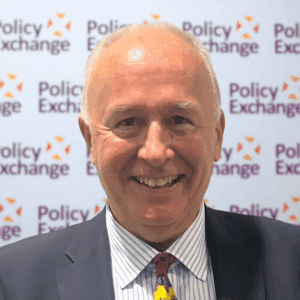
Professor Simon Lee is Emeritus Professor of Jurisprudence at Queen’s University Belfast.
He has had experience at all levels in diverse universities in different parts of the United Kingdom. He has been, successively, the Rector and Chief Executive of Liverpool Hope University College, the Vice-Chancellor of Leeds Metropolitan University, the Chair of Level Partnerships, the Executive Director of the Cambridge Theological Federation and a Fellow of St Edmund’s College, Cambridge, before returning to his roots as a law professor at the Open University and Aston University.
He had won various University prizes as a Brackenbury Scholar at Balliol College, Oxford, and was then a Harkness Fellow at Yale Law School, before becoming a lecturer in law at Trinity College, Oxford, and then King’s College London, ahead of being appointed Professor of Jurisprudence at Queen’s University Belfast at the age of 31. Under his leadership, Liverpool Hope and Leeds Met also won awards for their pioneering local, regional, national and international work.
He pioneered partnerships across higher and further education in Lancashire from 1995 to 2003 and in Yorkshire and the North-East from 2003 to 2009. In the middle of that period, he also served on the expert advisory group established by the Scottish Executive and the Scottish Higher & Further Education Council to advise the UHI Millennium Institute on its path to becoming a university of further and higher education partner institutions.
With the journalist Robin Wilson, he was the co-founder of a citizens’ movement in Northern Ireland, Initiative ’92, which established the Opsahl Commission in 1992, creating all-inclusive dialogue at grassroots level in public hearings all around Northern Ireland in 1993. This civic engagement played a significant part in the peace process which led to the first paramilitary ceasefire in 1994.
Simon Lee has decades of experience in governance, chairing many boards, including currently the William Temple Foundation and the Everton Library Trust.
He is the author of several books, including Law & Morals (Oxford University Press, 1986), The Cost of Free Speech (Faber, 1990), Uneasy Ethics (Random House, 2003), and Vincent’s 1863-2013 (Third Millennium, 2014). Most relevantly to the White Paper on Skills, Simon Lee was the co-author with Marie Fox of a pioneering book in 1991, Learning Legal Skills (Blackstone), and in 2023 he was the co-editor with Ian Markham of a book of essays on university life, The Serendipity of Hope (Pickwick, Wipf & Stock, USA).
Related Publications
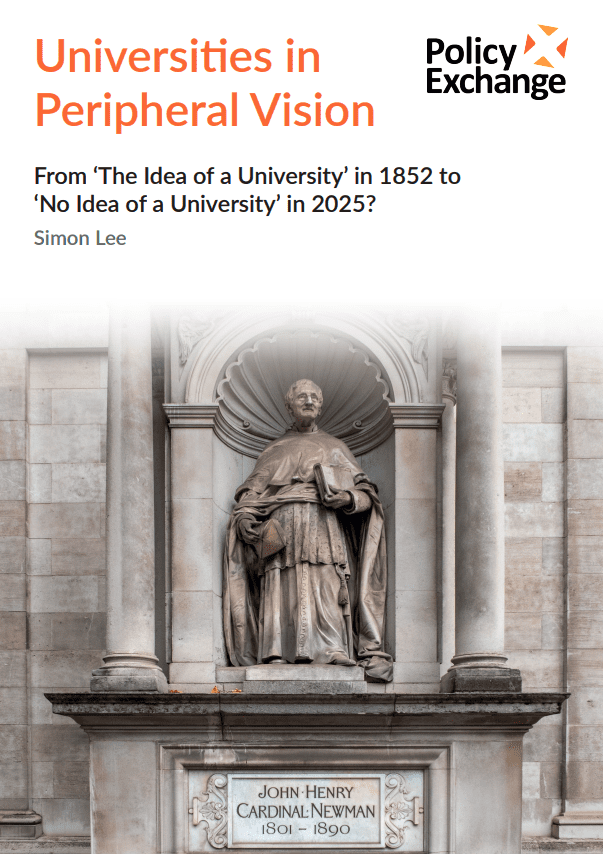
Universities in Peripheral Vision
Download Publication Online Reader On the Feast of All Saints, 1st November 2025, Pope Leo XIV declared St John Henry Newman a Doctor of the Universal Church. He will be the 38th person to be declared a Doctor of the Church, and only the second English person to be so declared, after the Venerable Bede. One of Newman’s lasting achievements was his series of lectures, later collected and […]Related Blogs
Simon Lee | Judicial Power: What is Left Unsaid?
The Judicial Power Project is on to something with its collection of a dozen essays, entitled Judicial Power and the Left published earlier this year. It is just that the something is not, in my opinion, a deepening of our understanding of judicial power or, at least, not yet. Nevertheless, the project and the editors are to be congratulated on bringing together a diverse range of authors, from different disciplines and parts […]Simon Lee: From judge-shaming to judiciousness-sharing
Sir Stephen Sedley, possibly the most radical lawyer to have become a judge in the UK, has pointed out that, ‘Left to journalists, commentary on the law and the legal system is sometimes excellent but frequently jejune and agenda-driven’. Joshua Rozenberg, the excellent journalist, lawyer and honorary QC, recently took the Judicial Power Project to task in the Guardian for ‘judge-shaming’. A week later, however, also in the Guardian, he […]